
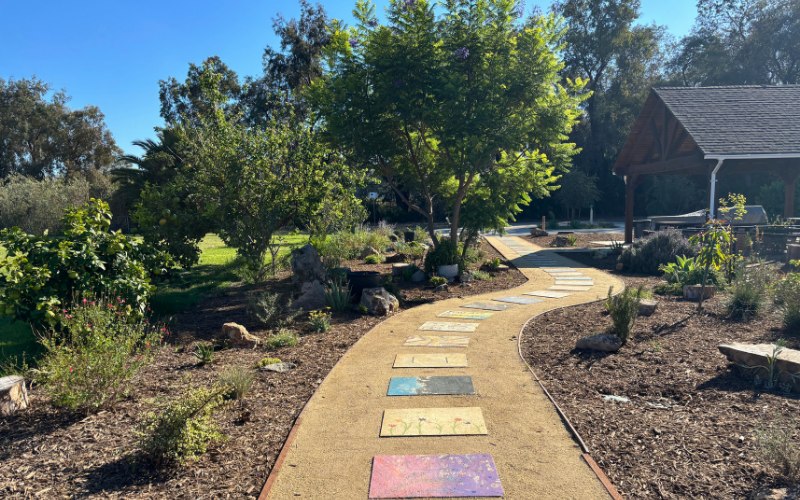
A new pollinator garden is growing lessons in nature, teamwork and community
Connection is at the heart of healing. For young people navigating emotional and behavioral challenges, learning to connect—with themselves, with others and with the world around them—can be an important part of their journey.
That’s why a new pollinator garden at Casa Pacifica is about much more than growing flowers.
Created in partnership with Native Monarchs, the garden gives youth a place to slow down, get their hands in the soil and experience the rewards of caring for something over time. As they plant, water, observe and work together, they’re practicing patience, responsibility and cooperation while experiencing the simple satisfaction of watching something grow.
“We often teach our youth about pollinators and how important they are to the garden and our ecosystem, but being able to watch and discover how these creatures interact with each other allows us to bring the learning out of the book and into their environment here at Casa Pacifica,” explains Ali Villegas, Farm to School Program Coordinator.
The garden also offers a living lesson in connection. Designed to provide food and habitat for pollinators, it welcomes bees, hummingbirds and other creatures that play an important role in a healthy ecosystem—including monarch butterflies.
As youth watch a butterfly move from flower to flower or discover a bee gathering pollen, they can see those connections happening in real time. The plants provide resources for pollinators; the pollinators help plants reproduce; and together, they contribute to a larger ecosystem.
“One of the things I try to teach through Native Monarchs is that almost everything we put into a habitat can have a purpose. Nectar-rich flowers provide food for adult pollinators, while specific host plants allow certain insects to reproduce. For example, monarch butterflies can visit many flowers for nectar, but their caterpillars can only eat milkweed. Without milkweed, there can be no next generation of monarchs,” explains Chris Amendt, founder of Native Monarchs.
For Casa Pacifica youth, the garden offers something even more personal: a chance to be part of that ecosystem. They can contribute to its growth, work alongside their peers and discover that small acts of care can have an impact.
“This pollinator garden is more than a butterfly garden. It’s a living outdoor classroom and functioning wildlife habitat where almost everything has a purpose—and where the garden itself will continue to change and offer something new to discover,” Amendt says.
In this small corner of Casa Pacifica, everything is connected. A seed becomes a flower. A flower sustains a butterfly. Young people come together to care for the garden and, along the way, discover the satisfaction and possibility that can come from nurturing something beyond themselves.
And with every season, there will be something new to discover.
Growing Something Together
This garden is also a reflection of what can happen when a community comes together around a shared purpose. We are grateful to the organizations whose generosity helped bring this vision to life, including Yardi Systems; the Casa Pacifica Angels; and the Camarillo Rotary Foundation.
Their support helps create opportunities for Casa Pacifica youth to learn, explore and connect with the natural world and reminds us that meaningful change, like a garden, grows through many hands working together.

About Casa Pacifica
Headquartered in Camarillo, California, Casa Pacifica is the largest nonprofit provider of children’s and adolescent mental health services in Ventura and Santa Barbara Counties. Our nationally accredited programs include residential treatment, therapeutic behavioral services, wraparound care, transitional youth services, school-based mental health services and foster care support, along with a fully certified, diploma-granting Non-Public School serving grades K–12. Casa Pacifica specializes in treating youth facing complex mental health challenges such as anxiety, depression, and emotional dysregulation. Since 1994, Casa Pacifica has helped transform the lives of nearly 54,600 at-risk children and youth.
For more information or to get involved, email info@casapacifica.org or call 805-366-4040.